insight
Clear Defaults


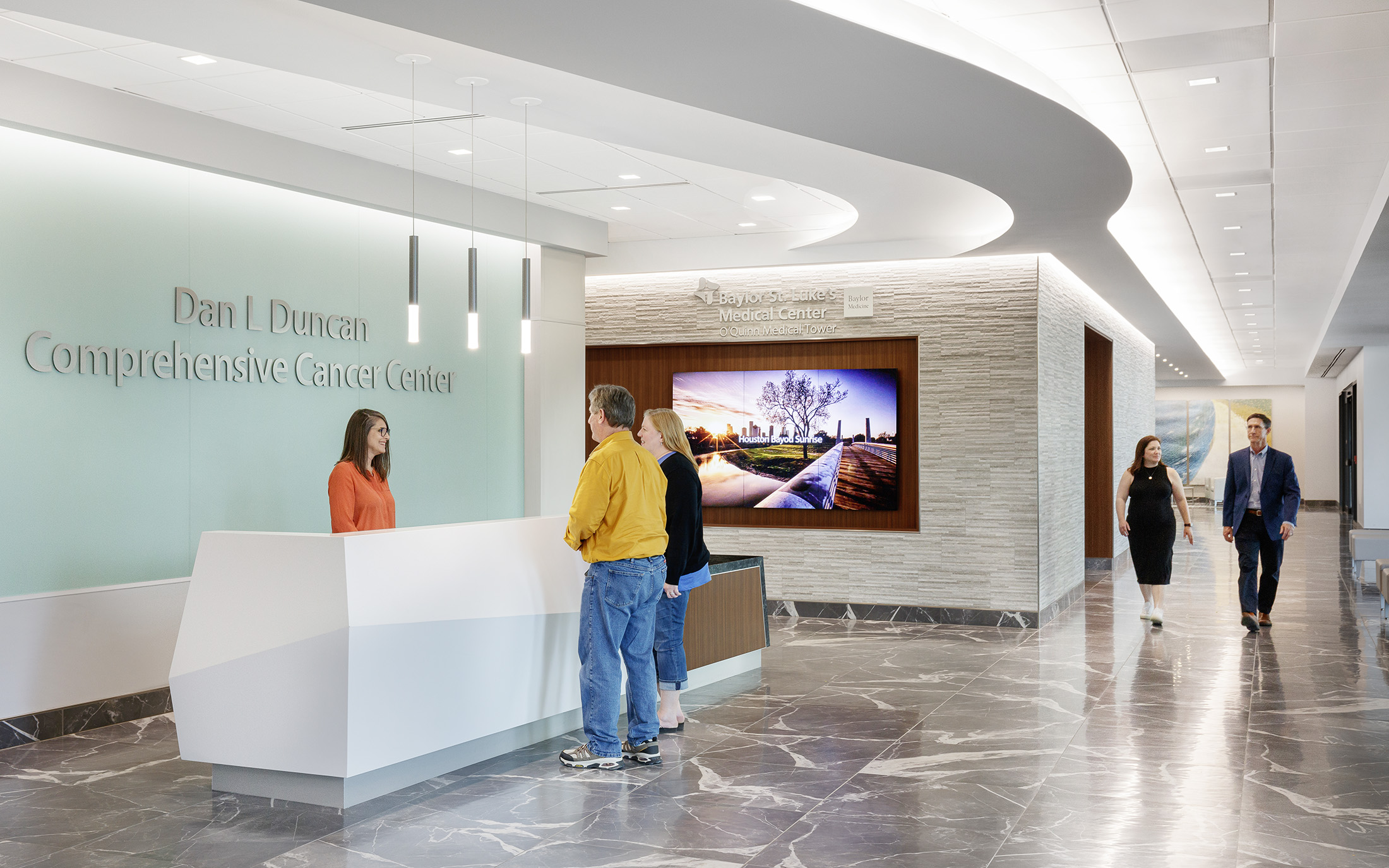
O’Quinn Medical Tower houses high-acuity outpatient services, including the Dan L. Duncan Comprehensive Cancer Center. The client challenged the design team to create a calming, intuitive, and emotionally supportive patient journey, one that acknowledged the psychological weight of treatment while improving ease of navigation and comfort from arrival through discharge.
This shift placed heightened emphasis on sensory experience, spatial clarity, and environmental consistency, setting the foundation for lighting to play a critical, if subtle, role.
During early visioning workshops, architects, clinicians, and end users examined how patients, visitors, and staff move through and emotionally respond to the building. These sessions revealed that small environmental stressors—harsh contrast, glare, visual clutter, and disorientation—compound anxiety, particularly for oncology patients. To counteract this, the architectural strategy focused on:
Lighting became a primary tool for reinforcing these goals. Rather than serving as a visual focal point, light needed to quietly support orientation, calm, and spatial legibility, without drawing attention to the source itself.
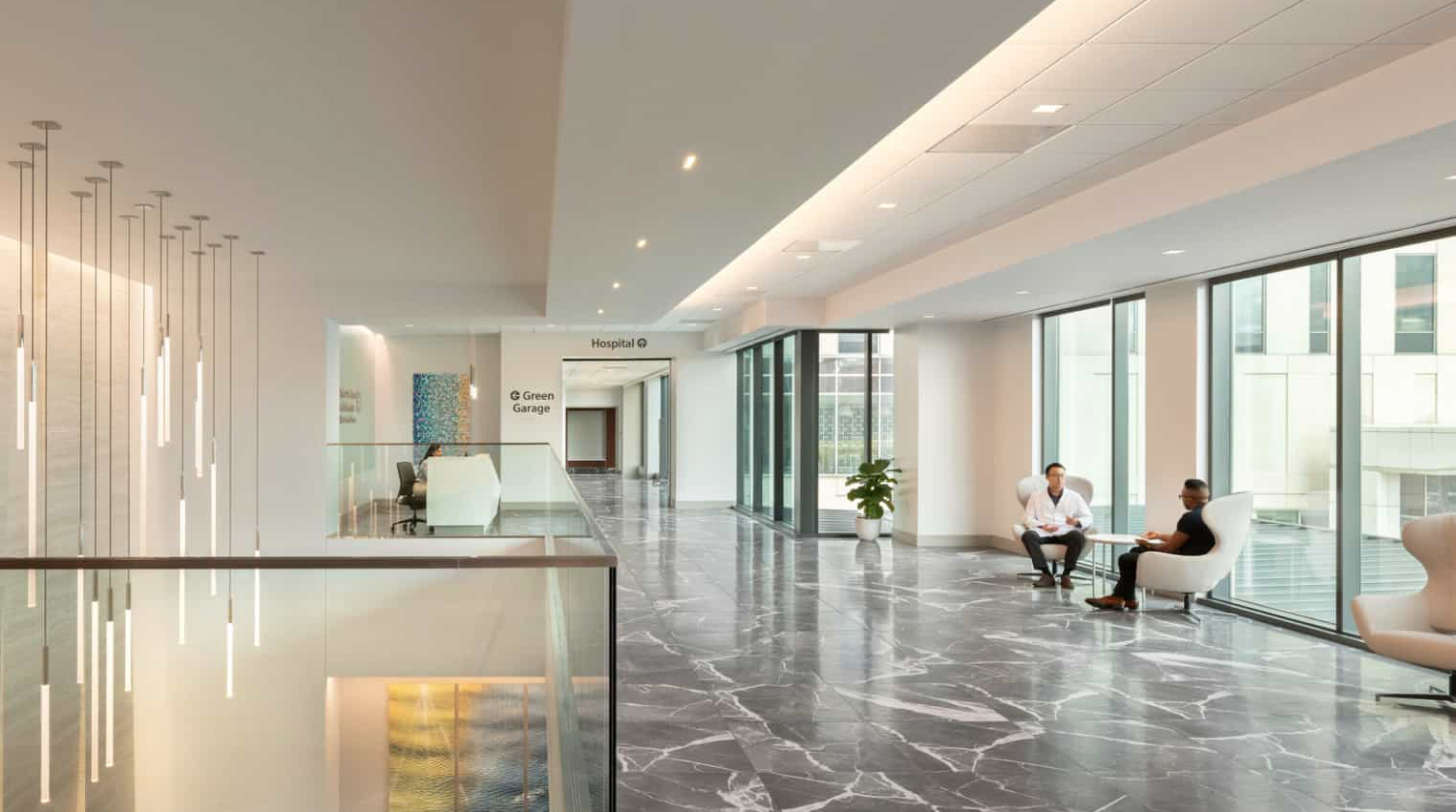
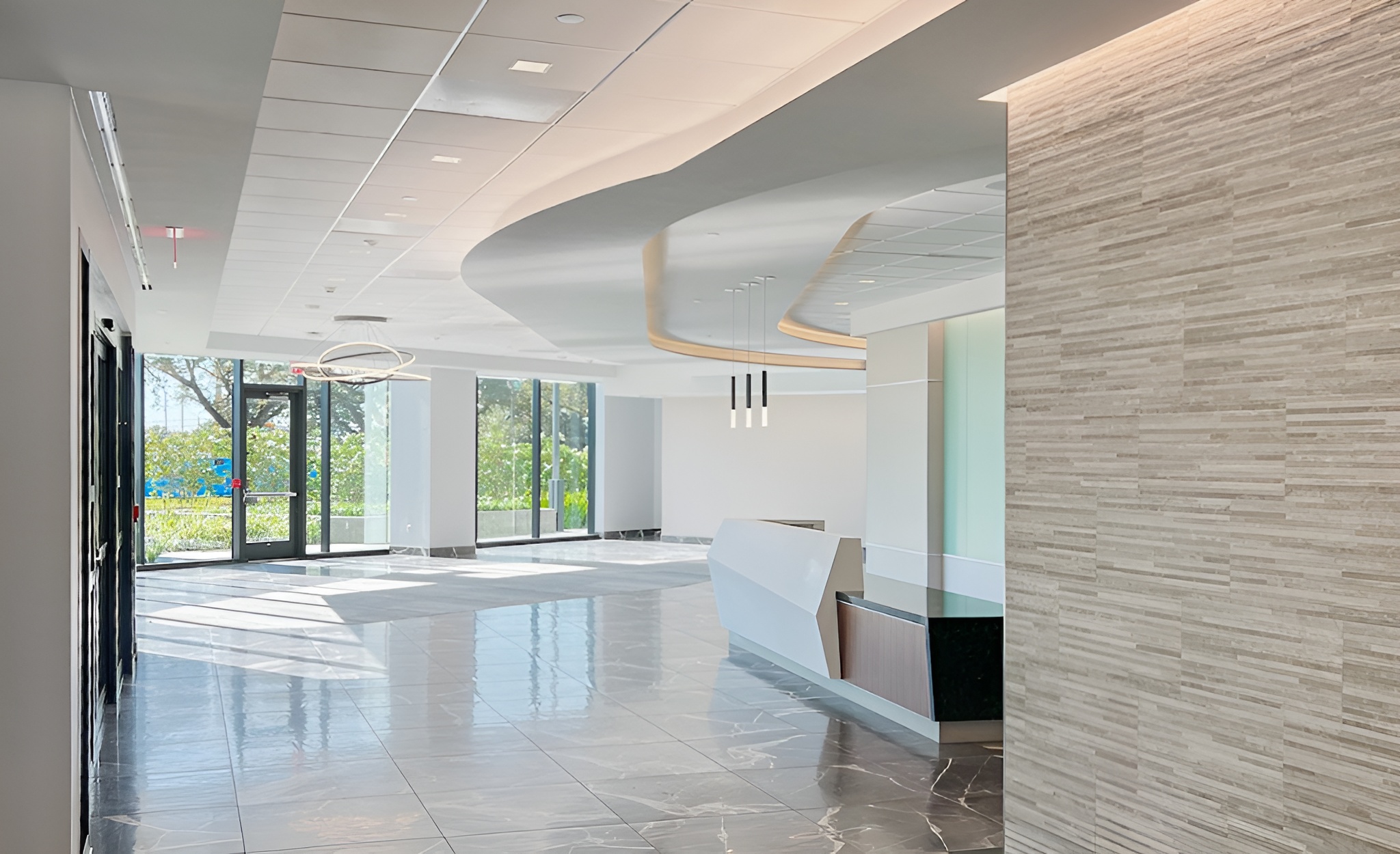
To support the intended patient experience, indirect illumination was used extensively throughout public and patient-facing spaces. Continuous cove lighting delivers uniform, low-glare illumination that minimizes visual fatigue while enhancing architectural form. By concealing the source and reflecting light off architectural surfaces, the system reinforces:
This approach allows the architecture, not the luminaire, to define the experience.
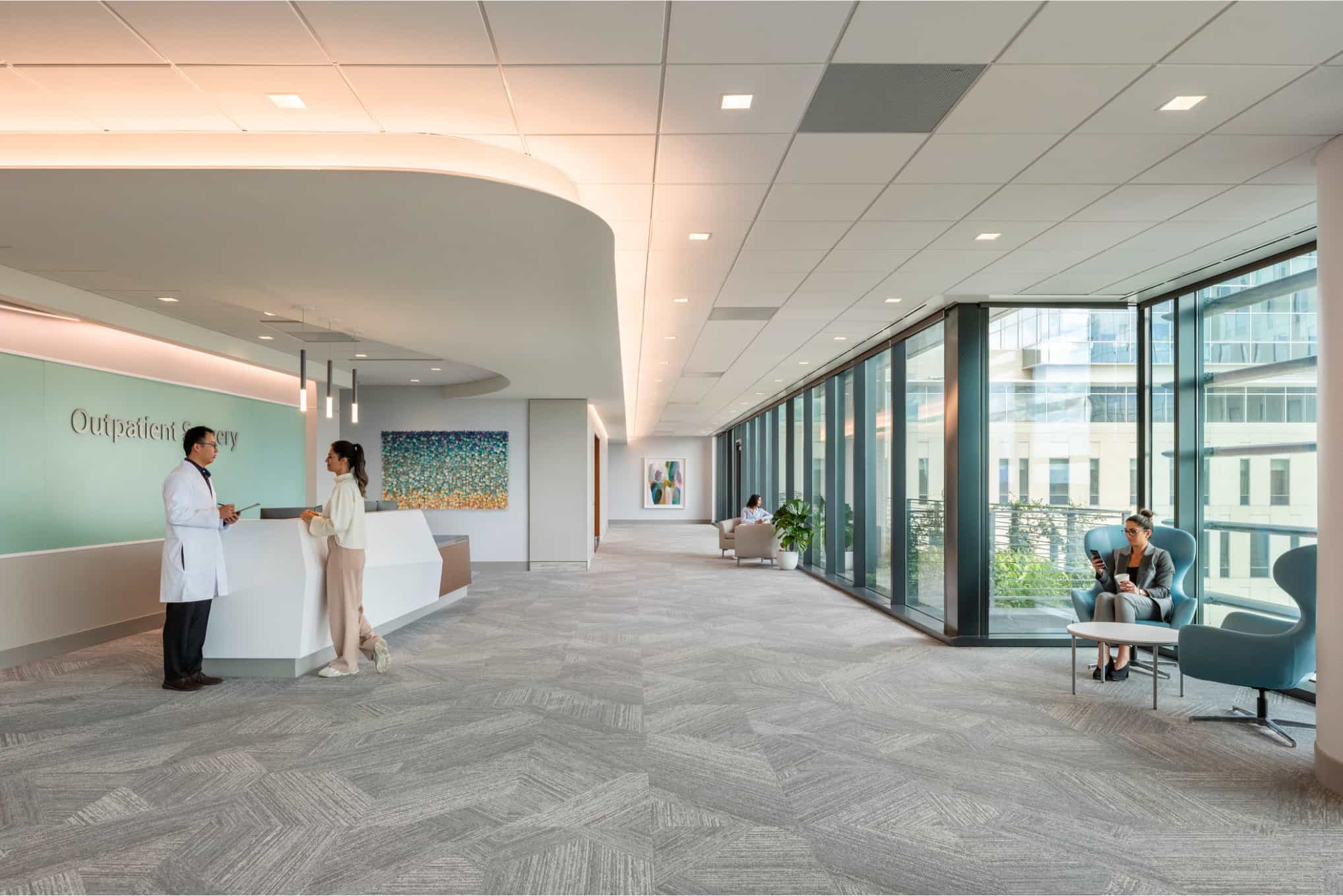
The architectural language of the lobby and circulation spaces is defined by flowing curves and layered ceiling forms. For lighting to reinforce these gestures, it had to maintain continuous alignment, consistent output, and precise geometry—without field modification or visual interruption. This demanded an approach where lighting systems were
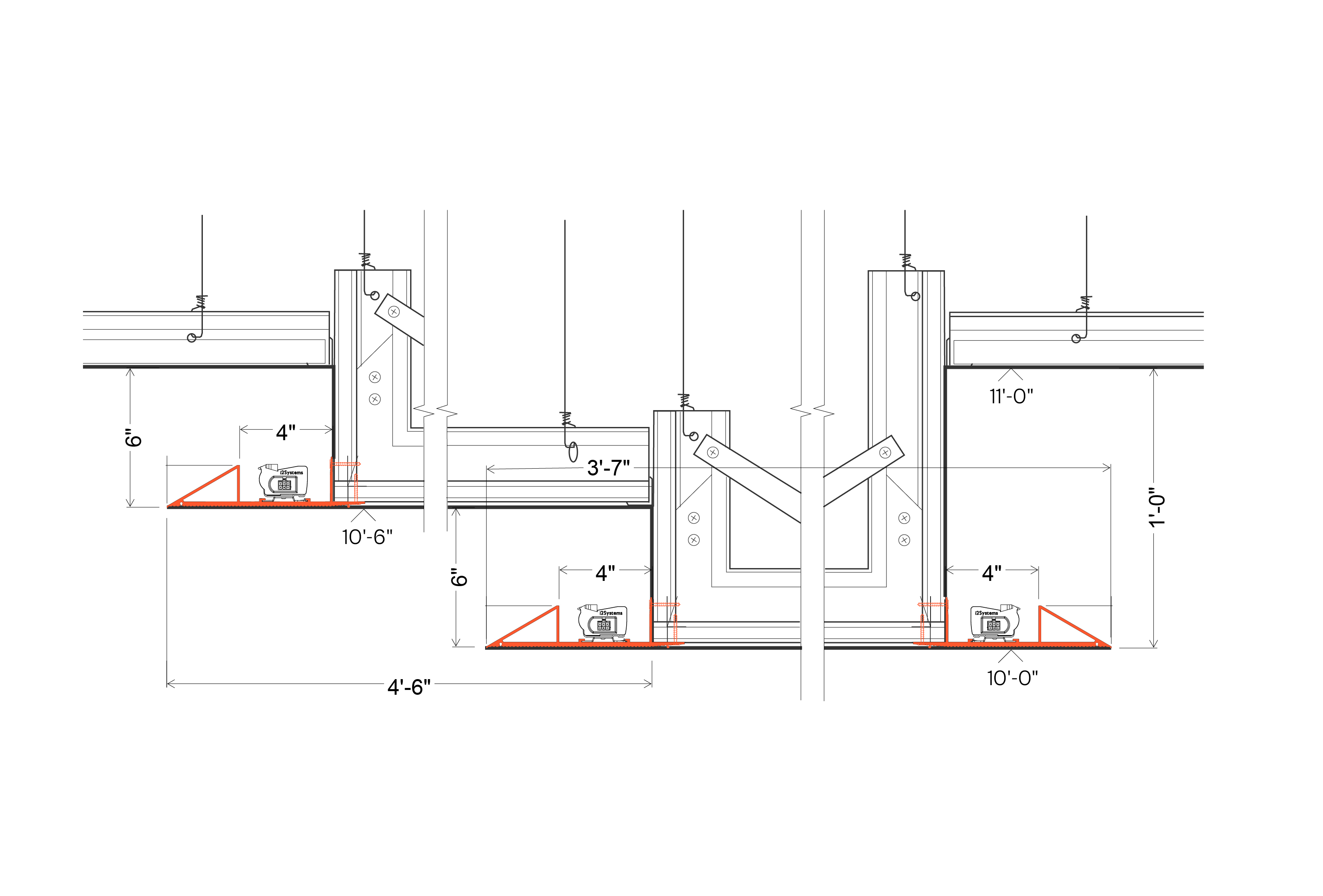
By using prefabricated cove systems engineered for vertical blocking, the lighting integrates precisely into multi-radius ceiling geometry, delivering uniform illumination, alignment with design intent, and predictable performance while reducing installation and coordination risk in healthcare environments.
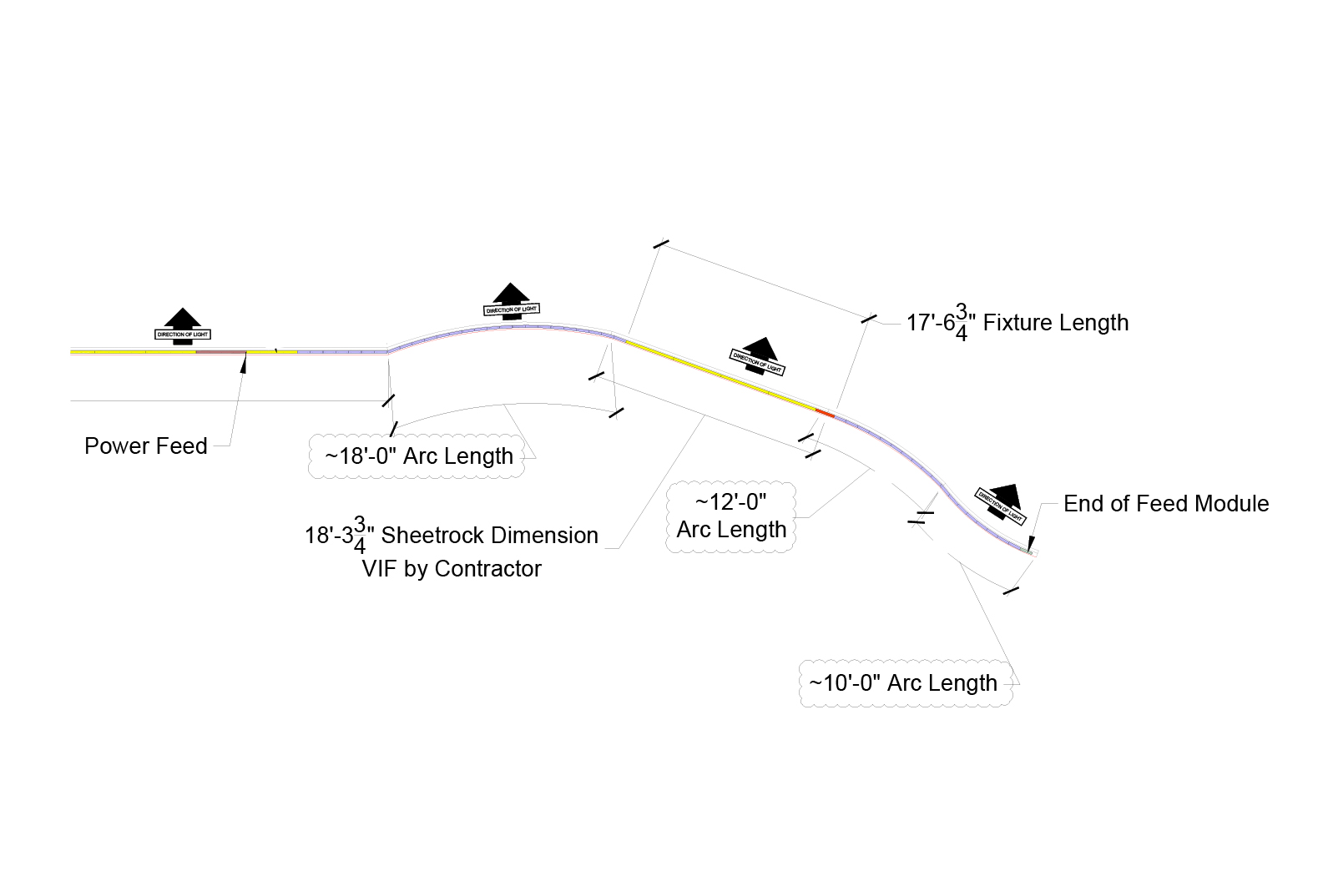
Early resolution of geometry, engineered systems, and documentation brings clarity to complexity, reducing risk and uncertainty well before installation. Multiple radii required comprehensive shop drawings to align geometry and execution, ensuring predictability before work began onsite.
The gentle rhythm of placid waves demanded exceptional accuracy. Quentin Thomas Associates selected our precision, prefabricated cove system to translate architectural rhythm into light, allowing form to emerge through function.
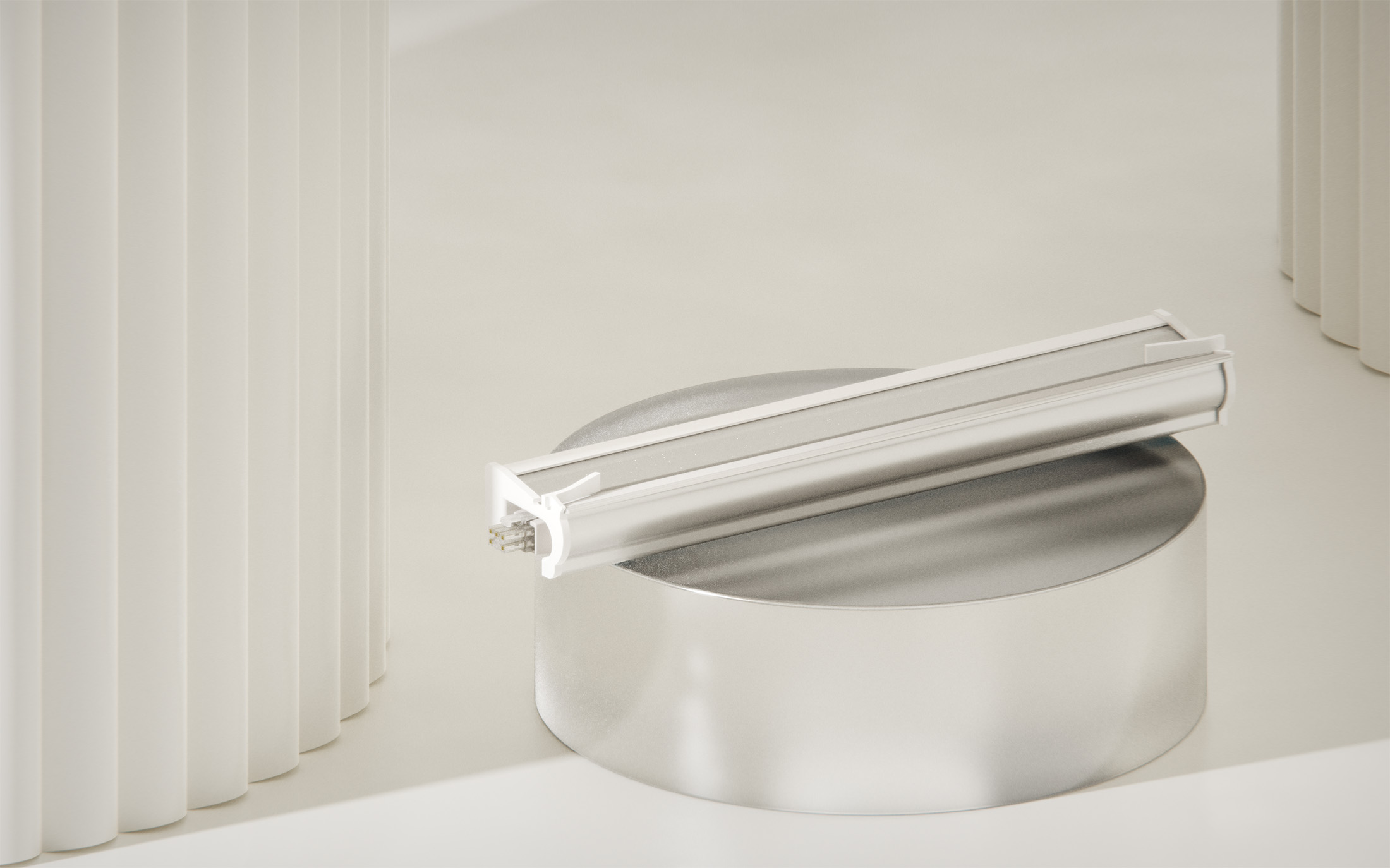
Configured at 3500K with high CRI and paired with 0–10V dimming, the Compose lighting system balances warmth and clarity while allowing staff to adjust illumination levels throughout the day. This flexibility supports varying operational needs while maintaining a consistent visual environment for patients.
The completed O’Quinn Medical Tower has been widely praised for its thoughtfulness and sense of calm. Consolidating cancer care services in a more accessible location reduced logistical stress for patients, while the carefully choreographed environment supports healing through comfort, clarity, and dignity.
The success of virtual design tools and lighting-focused evaluation has reshaped the firm’s design process, reinforcing the value of experience-driven decision-making supported by precise technical execution.
In this project, indirect lighting was not a decorative element—it was a strategic layer of the architecture itself, translating patient-centered goals into measurable visual comfort, constructability, and performance.
By resolving detail early, coordinating precisely, and executing predictably, the lighting system supports the architectural vision, quietly, consistently, and exactly as intended.
The cove became a very important and elegant feature of thereception/waiting area. We were delighted that I2 could create thecustom curvature as shown in the Interior Design drawings. Thefixture is magically hidden from view from even distant viewingangles and is uniquely effective in pushing light out across the ceilingcontributing greatly to the airy feeling of the space."
Quentin Thomas, IESNA
President / Quentin Thomas Associates, Inc.